Does an Anti-Inflammatory Diet Actually Help PCOS Symptoms?
Quick Answer: Chronic low-grade inflammation is a documented feature of PCOS for many women, and anti-inflammatory eating patterns (more omega-3s, fiber, and produce; less refined sugar and processed fat) show real symptom improvement in research, though it’s not a replacement for medical treatment.
You’ve read a dozen articles promising an anti-inflammatory diet will ‘fix’ PCOS. It won’t fix it, but the underlying mechanism is more legitimate than most diet trends — here’s what’s actually going on.

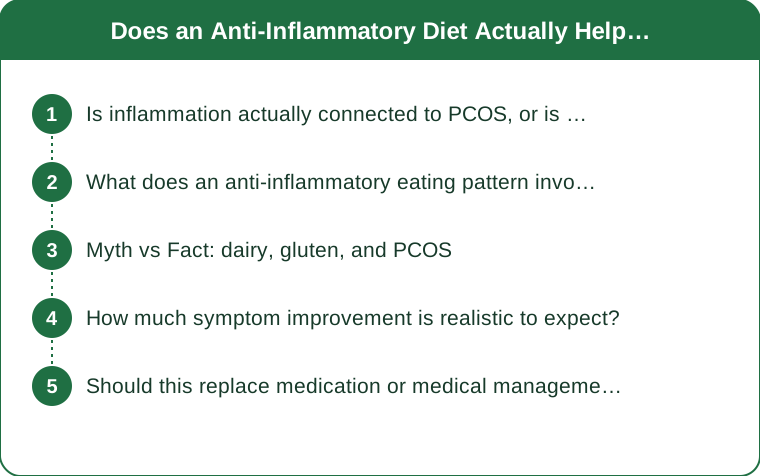
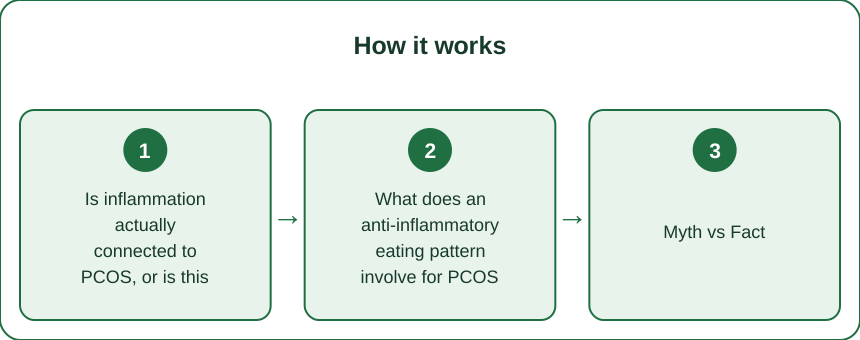
Is inflammation actually connected to PCOS, or is this diet-trend logic?
This one has real research behind it — multiple studies have found elevated inflammatory markers like CRP in women with PCOS compared to those without, independent of body weight. Inflammation is believed to play a role in the insulin resistance that drives many PCOS symptoms, creating something of a feedback loop.
That’s different from most diet trends that borrow the word ‘inflammation’ loosely — here there’s an actual measured physiological connection.
What does an anti-inflammatory eating pattern involve for PCOS specifically?
The general framework overlaps heavily with a Mediterranean-style pattern: fatty fish or plant omega-3 sources several times a week, high fiber intake from vegetables and whole grains, and minimizing refined sugar and highly processed fats. Fiber in particular matters for PCOS because it slows glucose absorption, directly supporting the insulin sensitivity piece.
It’s less about eliminating entire food groups and more about shifting the ratio of what fills your plate most days.

Myth vs Fact: dairy, gluten, and PCOS
Myth: everyone with PCOS needs to cut dairy and gluten. Fact: there’s no broad evidence that dairy or gluten themselves are inflammatory for most people with PCOS — some individuals report symptom improvement cutting them, likely due to other dietary shifts happening alongside, not the elimination itself.
Myth: ‘clean eating’ language means anything. Fact: the evidence points to specific mechanisms (fiber, omega-3s, added sugar reduction), not vague ‘clean’ versus ‘processed’ framing that isn’t nutritionally precise.
How much symptom improvement is realistic to expect?
Research on anti-inflammatory and low-glycemic dietary patterns in PCOS shows measurable improvements in insulin sensitivity, and for some women, more regular cycles over a period of months — but results vary significantly, and diet alone often isn’t sufficient for women with more severe insulin resistance.
It’s reasonable to expect this as one supportive piece of a broader management plan, not a standalone cure.
Should this replace medication or medical management?
No — for many women with PCOS, medications like metformin or hormonal treatments address mechanisms diet alone can’t fully reach, particularly with significant insulin resistance. Diet changes work best as a complement, discussed with your provider rather than a substitute for treatment they’ve recommended.
This is general information, not medical advice — PCOS presentations vary widely, and what helps one person’s symptom profile may not match yours.
TL;DR:
- Chronic low-grade inflammation is a documented, measurable feature of PCOS for many women
- Fiber, omega-3s, and reduced added sugar are the evidence-backed pillars, not vague ‘clean eating’
- No solid evidence supports blanket dairy or gluten elimination for PCOS specifically
- Diet is a supportive tool, not a replacement for medical treatment
The inflammation connection is real, which makes this one of the few PCOS diet claims worth taking seriously — just keep expectations calibrated to ‘supportive,’ not ‘curative.’
Keep Reading
This article is for general informational purposes only and is not medical advice. Always consult a qualified health professional for guidance specific to you.