The Cardio Mistake That Can Actually Make PCOS Symptoms Worse
Quick Answer: High-volume, high-intensity cardio can elevate cortisol enough to worsen insulin resistance in some PCOS cases, while moderate strength training plus walking tends to support insulin sensitivity more reliably — the type of exercise matters as much as doing it at all.
You’ve been doing cardio consistently and your symptoms haven’t budged, or worse, feel more stubborn. The exercise type, not the effort, may be the actual mismatch.

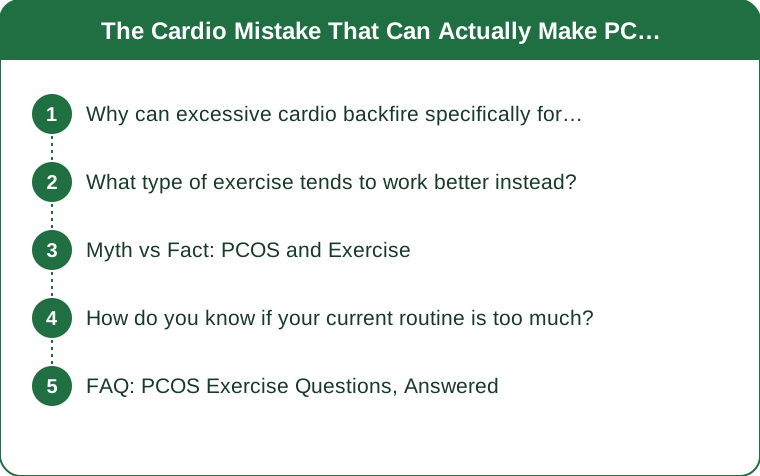
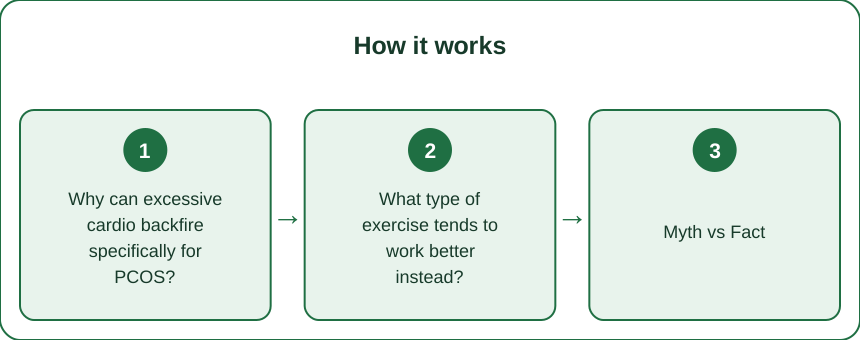
Why can excessive cardio backfire specifically for PCOS?
PCOS is closely tied to insulin resistance for many people, and chronically elevated cortisol (which can result from excessive, under-recovered high-intensity cardio) can worsen insulin resistance rather than help it. This creates a frustrating paradox: pushing harder on cardio can, for some people, move symptoms in the wrong direction.
This doesn’t mean cardio is bad — it means volume and intensity need to be matched to individual recovery capacity, which PCOS can sometimes reduce.
What type of exercise tends to work better instead?
Strength training 2-3x/week is one of the more consistently supported recommendations for PCOS, since building muscle mass directly improves insulin sensitivity — muscle tissue is where a large share of blood glucose gets taken up.
Moderate walking (not high-intensity) rounds out a lower-cortisol-impact routine that still supports metabolic health without the same overreaching risk as frequent hard cardio sessions.

Myth vs Fact: PCOS and Exercise
Myth: More exercise is always better for managing PCOS. Fact: Volume beyond what your body can recover from can worsen the exact hormonal picture you’re trying to improve.
Myth: Cardio should be avoided entirely with PCOS. Fact: Moderate cardio remains valuable — the issue is specifically excessive high-intensity volume without adequate recovery, not cardio itself.
Myth: Weight loss is the only meaningful PCOS exercise goal. Fact: Insulin sensitivity, mood, and energy improvements happen independent of weight change and are worth tracking as real progress markers.
How do you know if your current routine is too much?
Watch for persistent fatigue that doesn’t improve with rest, worsening sleep, increased cravings, or symptoms feeling more stubborn despite consistent effort — these can signal your training volume has outpaced recovery capacity, a pattern worth discussing with a provider familiar with PCOS.
A simple adjustment test: reducing high-intensity sessions to 1-2x/week and adding strength training 2-3x/week for 6-8 weeks, then reassessing energy and symptoms, gives useful real-world feedback.
FAQ: PCOS Exercise Questions, Answered
Is HIIT completely off the table with PCOS?
Not necessarily — 1-2 well-recovered HIIT sessions per week can work for many people; the concern is specifically high daily volume without adequate rest.
How soon might symptoms respond to an exercise type change?
Some people notice energy and cravings shift within a few weeks, though hormonal markers typically take longer, often 8-12 weeks, to show measurable change.
Should I get bloodwork before changing my exercise routine?
Discussing your specific insulin and hormone markers with a provider can help tailor intensity recommendations more precisely than general guidance alone. This is general information, not medical advice.
TL;DR:
- Excessive high-intensity cardio can raise cortisol and worsen insulin resistance for some PCOS cases
- Strength training 2-3x/week plus moderate walking often supports insulin sensitivity better
- Persistent fatigue despite consistent effort can signal a recovery mismatch
- Track energy and symptoms, not just weight, as your progress markers. This is general information, not medical advice.
Keep Reading
This article is for general informational purposes only and is not medical advice. Always consult a qualified health professional for guidance specific to you.