PCOS, Explained Kindly: What It Is and Where to Start
PCOS affects roughly one in ten women and somehow remains the most under-explained diagnosis in the exam room — many women leave with a pamphlet and a prescription and no story of what’s actually happening. Here’s the kind, practical version. (Information, not medical advice — your care team leads.)

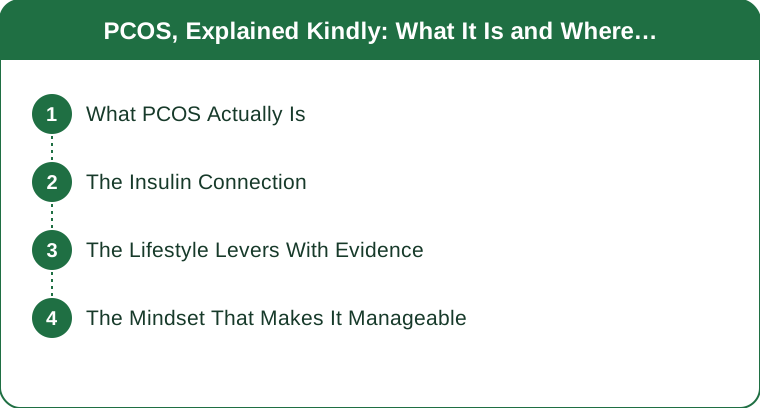
What PCOS Actually Is
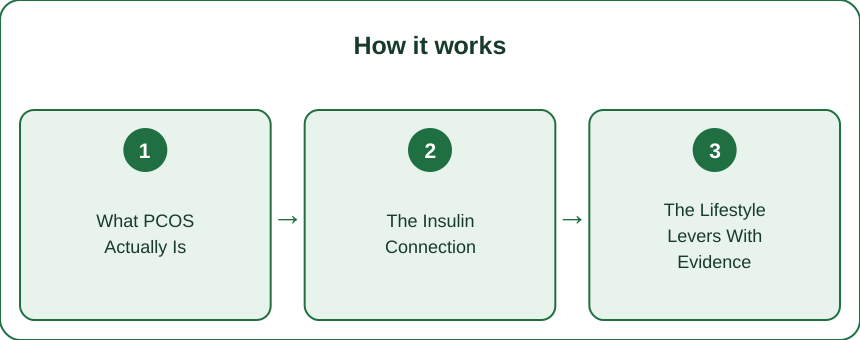
The short story: polycystic ovary syndrome is a hormonal pattern — typically some mix of irregular cycles, elevated androgens (driving acne, hair changes) and characteristic ovary appearance on ultrasound — with insulin resistance as a frequent engine under the hood. It’s a spectrum, not one disease: two women with PCOS can have almost entirely different symptom sets, which is why cookie-cutter advice fails and personalization matters.
The Insulin Connection
The under-explained core: many PCOS bodies respond to carbohydrates with higher insulin, and high insulin nudges the ovaries toward more androgen production — a loop that drives many symptoms. This is why lifestyle changes genuinely move the needle for many women: the target isn’t weight for its own sake; it’s insulin sensitivity, which responds to strength training, walking after meals, protein-forward eating and sleep — levers available starting today.

The Lifestyle Levers With Evidence
The practical toolkit: strength training (muscle is the body’s glucose sponge — the single most underrated PCOS intervention), balanced plates over crash diets (protein + fiber + fat with carbs, not instead of them; restriction spirals backfire), consistent sleep (one bad week measurably worsens insulin resistance), and stress management that’s real (cortisol feeds the loop). Medical options layered on top are common and legitimate — lifestyle and medicine are teammates, not rivals.
The Mindset That Makes It Manageable
The kind part: PCOS is chronic but highly manageable, symptoms respond meaningfully to consistent small changes, and the diagnosis is also information that lets you work WITH your body instead of being confused by it. Find a clinician who explains rather than dismisses (they exist; keep looking), track your own patterns (your data beats generic advice), and skip the miracle-cure corners of the internet — the boring levers are the ones with receipts.
Spectrum not sentence, insulin as the engine, strength training as the sponge. PCOS explained kindly is PCOS made manageable — and the boring levers, done consistently, are the whole secret.
Keep Reading
This article is for general informational purposes only and is not medical advice. Always consult a qualified health professional for guidance specific to you.