The PCOS-Sleep Loop: Why Bad Nights Make Symptoms Worse and Vice Versa
Quick Answer: PCOS and poor sleep run a two-way loop: the condition raises rates of insomnia and sleep apnea, while short or fragmented sleep worsens insulin resistance and stress hormones — the exact mechanisms driving PCOS symptoms. Breaking the loop means treating sleep as core PCOS management: consistent timing, a dark cool room, morning light — and crucially, screening for sleep apnea, which is dramatically under-diagnosed in PCOS. This is general information, not medical advice.
PCOS advice arrives as diet and exercise plans, with sleep mentioned as an afterthought wellness garnish. The research tells a different story: sleep sits inside the condition’s engine room, and for some women it’s the loudest unaddressed lever they have.

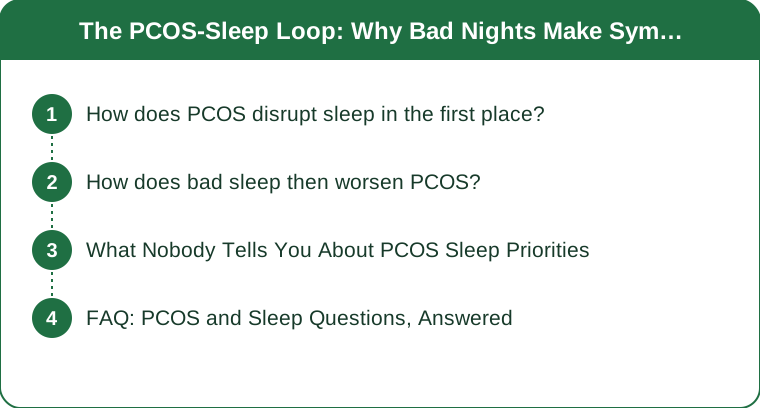
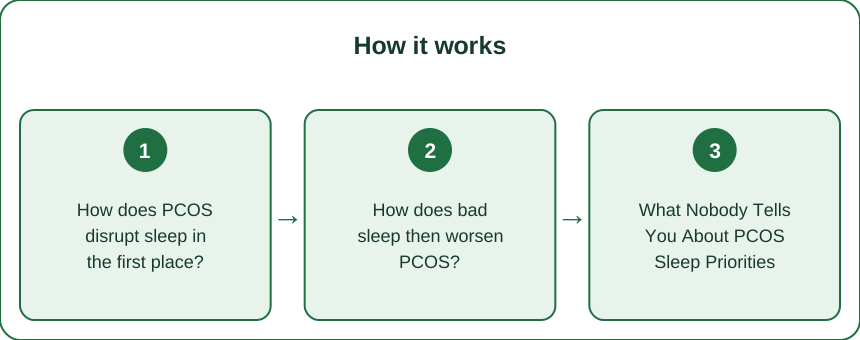
How does PCOS disrupt sleep in the first place?
Several routes, often stacked:
- Sleep apnea, the big under-diagnosed one: women with PCOS show substantially higher rates of obstructive sleep apnea than weight-matched women without it — the hormonal profile itself appears to contribute, meaning lean women with PCOS aren’t exempt. Apnea classically presents in women not as dramatic snoring but as fatigue, morning headaches, and ‘insomnia’ — which is why it hides.
- Hormonal arousal effects: androgen and progesterone patterns in PCOS can fragment sleep architecture and delay sleep onset for some women.
- The anxiety load: PCOS carries elevated anxiety and depression rates, and a racing 11pm mind is a sleep problem with a mental-health address.
The practical takeaway: ‘I sleep badly’ in PCOS isn’t one problem — it’s a differential. Waking exhausted after a full night, morning headaches, or a partner noticing breathing pauses moves apnea screening to the top of the list — it’s a solvable, high-impact find. This is general information, not medical advice.
How does bad sleep then worsen PCOS?
This is the return half of the loop, and it runs through PCOS’s core machinery:
- Insulin resistance: even a few nights of short sleep measurably worsens insulin sensitivity in healthy people — and insulin resistance is the engine behind many PCOS symptoms. Chronic short sleep is, functionally, an insulin-resistance generator pointed at the exact vulnerability.
- Cortisol and appetite: sleep debt elevates evening cortisol and reshapes hunger hormones (more ghrelin, less leptin) — driving the carb-heavy cravings that make PCOS’s nutritional management twice as hard on tired days.
- The behavioral cascade: exhausted days skip workouts, lean on convenience food, and end in wired-tired late nights — every arrow pointing the wrong way.
Net effect: a woman doing everything ‘right’ on diet and exercise while chronically under-slept is pushing a boulder with the brakes on. It also reframes priorities — for sleep-deprived women with PCOS, an earlier night may return more than a harder workout.

What Nobody Tells You About PCOS Sleep Priorities
The standard sleep-hygiene list applies, but PCOS shifts the ranking:
- #1 — Rule out apnea before optimizing bedtime routines. No amount of lavender fixes a breathing disorder; screening (validated questionnaires, home sleep tests via your clinician) is cheap and the treatment payoff — for energy, insulin metrics, and mood — can be enormous.
- #2 — Consistency over duration heroics: a steady sleep-wake window (same ±30-60 minutes, weekends included) stabilizes the circadian signals that hormone systems key off — particularly relevant when hormones are the whole topic.
- #3 — Morning light, evening dim: bright light shortly after waking anchors the clock and supports evening melatonin timing — a free, boring, evidence-backed lever.
- #4 — The evening carb note: some women with PCOS find a modest complex-carb dinner (vs. none) eases sleep onset — blood sugar dips overnight can fragment sleep. Individual experiment territory.
- #5 — Caffeine honesty: PCOS fatigue drives heavy afternoon caffeine, which drives the 11pm wired-tired, which drives tomorrow’s fatigue. The loop within the loop — cutting caffeine after ~2pm is the unglamorous fix.
All of it works alongside medical management, never instead of it. This is general information, not medical advice.
FAQ: PCOS and Sleep Questions, Answered
How much sleep should I aim for with PCOS?
The general adult 7-9 hours applies — but with the insulin stakes, treating the lower bound as a floor matters more than for the average person. The steadier win: same window nightly, since irregularity independently stresses the metabolic systems in question.
Do I need a sleep study even though I’m not overweight?
If symptoms point that way, yes — the PCOS-apnea link persists after adjusting for weight, and lean-woman apnea is precisely the case clinicians historically missed. Waking unrefreshed despite adequate hours is reason enough to raise it.
Can fixing sleep really move my labs?
Sleep extension studies in short-sleepers show improved insulin sensitivity within weeks, and treating apnea improves metabolic and blood-pressure markers — so the mechanism is real, with individual results varying. It’s the rare PCOS intervention that costs nothing and helps everything else work better. Discuss specifics with your clinician; this is general information, not medical advice.
TL;DR:
- The loop: PCOS raises insomnia and (especially) sleep apnea risk; short sleep worsens insulin resistance and cravings — the condition’s core machinery
- Apnea is dramatically under-diagnosed in PCOS, including in lean women — screening outranks bedtime aesthetics
- Priorities: consistent sleep window, morning light, caffeine curfew, maybe a modest evening complex carb
- Sleep is core PCOS management alongside medical care — not a wellness garnish
The boulder was never just the diet and the workouts — check the brakes first. This is general information, not medical advice.
Keep Reading
This article is for general informational purposes only and is not medical advice. Always consult a qualified health professional for guidance specific to you.