Why PCOS Workouts Feel Harder on Some Days Than Others
Quick Answer: PCOS-related insulin resistance and fluctuating hormone levels mean blood sugar availability for working muscles varies day to day, so the same workout can genuinely require more effort on some days even though nothing about your fitness has changed.
If Tuesday’s workout felt fine and Thursday’s identical session felt like wading through mud, that’s not inconsistency on your part — it’s a real physiological variable most workout plans don’t account for.

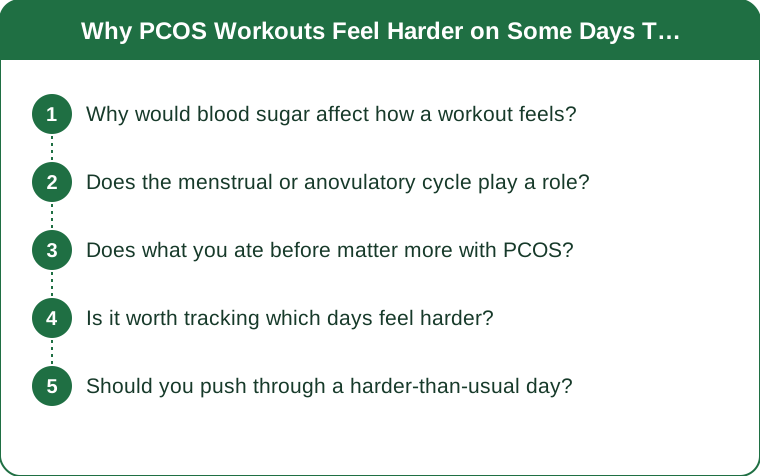
Why would blood sugar affect how a workout feels?
Working muscles rely heavily on accessible blood glucose for fuel, and PCOS-related insulin resistance can make glucose less readily available to cells on any given day depending on recent meals, sleep, and hormone timing. The muscles aren’t weaker — the fuel delivery is just less consistent.
Does the menstrual or anovulatory cycle play a role?
Yes — even irregular or anovulatory cycles common with PCOS still involve hormone shifts that affect energy availability and perceived exertion, just on a less predictable schedule than a typical 28-day cycle, which makes the pattern harder to plan around.

Does what you ate before matter more with PCOS?
Often more than for someone without insulin resistance — a lower-glycemic, protein-paired meal in the 1-2 hours before training tends to produce steadier energy than a high-sugar or skipped meal, where blood sugar swings can hit mid-workout.
Is it worth tracking which days feel harder?
Yes — a simple note of sleep, last meal timing, and perceived effort over a few weeks often reveals a personal pattern (like workouts after poor sleep consistently feeling harder), which turns a confusing variable into something predictable enough to plan lighter days around.
Should you push through a harder-than-usual day?
Not automatically — scaling intensity down on a day that feels disproportionately hard, rather than forcing the planned numbers, tends to produce better long-term consistency than grinding through a day your body is clearly signaling is off.
TL;DR:
- Insulin resistance makes blood sugar availability to muscles inconsistent day to day
- Hormone fluctuations happen even with irregular PCOS cycles
- Pre-workout meal composition matters more than usual
- Tracking patterns over weeks reveals what’s actually driving harder days
This is general information, not medical advice — persistent extreme fatigue is worth discussing with a professional.
Keep Reading
This article is for general informational purposes only and is not medical advice. Always consult a qualified health professional for guidance specific to you.