Why the Type of Exercise Matters More Than the Amount for PCOS Symptoms
Quick Answer: For PCOS specifically, insulin resistance is often the underlying driver behind many symptoms, and strength training and moderate-intensity exercise improve insulin sensitivity more reliably than high volumes of pure steady-state cardio, which can sometimes elevate cortisol enough in sensitive individuals to work against symptom improvement — matching exercise type to the underlying insulin-resistance mechanism tends to produce better results than simply increasing total exercise volume.
More cardio isn’t automatically better for PCOS, because the underlying issue for many people isn’t a lack of calorie burn — it’s insulin sensitivity, and that responds to a specific type of exercise more than to sheer volume.

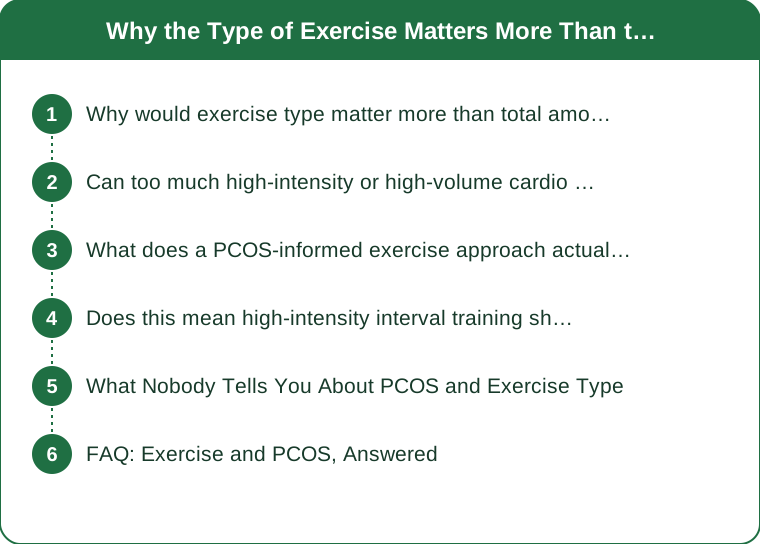
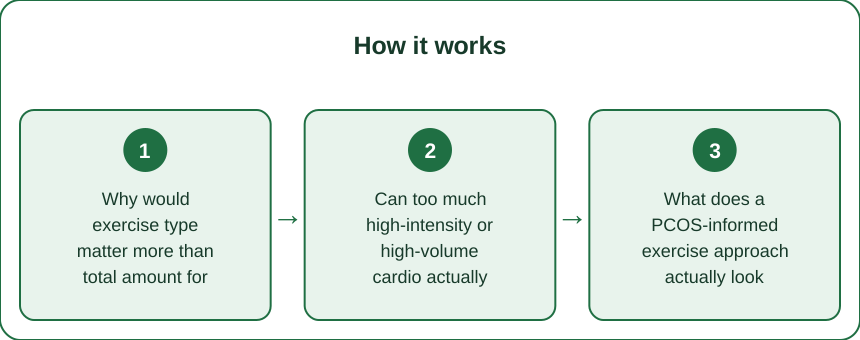
Why would exercise type matter more than total amount for PCOS specifically?
Insulin resistance is a central underlying mechanism in many PCOS cases, and different exercise types affect insulin sensitivity differently — resistance training in particular has strong, well-documented effects on improving insulin sensitivity by increasing muscle glucose uptake capacity, an effect that isn’t purely a function of total calories burned during a cardio session.
Can too much high-intensity or high-volume cardio actually work against PCOS symptom management?
For some individuals, yes — excessive high-intensity training can elevate cortisol, and since cortisol and insulin resistance are physiologically linked, chronically elevated cortisol from overtraining can work against the same insulin-sensitivity goal the exercise was meant to support. This doesn’t mean cardio is bad, but it means more isn’t automatically better, particularly at high intensity without adequate recovery.
What does a PCOS-informed exercise approach actually look like in practice?
A combination of regular resistance training (two to three sessions weekly) alongside moderate, rather than maximal, cardio volume tends to be the commonly recommended pattern, since this balances the insulin-sensitivity benefits of strength work with cardiovascular benefit, without pushing cortisol into a counterproductive range through excessive high-intensity volume.

Does this mean high-intensity interval training should be avoided entirely for PCOS?
Not entirely — moderate, well-recovered HIIT sessions can still provide benefit, but the key variable is total volume and recovery adequacy, not avoiding intensity altogether. A small amount of well-recovered high-intensity work combined with a resistance training base tends to work better than either extreme (all low-intensity or all high-intensity, high-volume) alone.
What Nobody Tells You About PCOS and Exercise Type
Exercise consistency over time matters more for the insulin-sensitivity benefit than any single session’s intensity, since these adaptations build gradually with repeated stimulus — a moderate, sustainable routine followed consistently for months produces more meaningful symptom improvement than an intense but inconsistent routine that gets abandoned after a few weeks.
FAQ: Exercise and PCOS, Answered
Is walking alone enough exercise for meaningful PCOS symptom benefit?
Walking provides real benefit, particularly for insulin sensitivity and stress reduction, but combining it with some resistance training generally produces more comprehensive benefit than walking alone.
How quickly do PCOS symptoms typically respond to an exercise type change?
Many people report initial improvements in energy and cycle regularity within a few months of consistent practice, though full results vary by individual and often benefit from combining exercise changes with broader lifestyle factors.
Should someone with PCOS consult a doctor before changing their exercise routine significantly?
Yes, particularly for anyone with other existing health conditions — a healthcare provider can help tailor an exercise approach to individual circumstances. This is general information, not medical advice.
TL;DR:
- Insulin resistance is a central mechanism in many PCOS cases, and exercise type affects it differently
- Resistance training has strong, well-documented insulin-sensitivity benefits beyond calories burned
- Excessive high-intensity, high-volume cardio can elevate cortisol enough to work against symptom goals
- A moderate combination of resistance training and cardio, done consistently, tends to work best
For PCOS, matching exercise type to the underlying insulin-resistance mechanism matters more than simply doing more exercise — consistency with the right type beats volume alone. This is general information, not medical advice.
Keep Reading
This article is for general informational purposes only and is not medical advice. Always consult a qualified health professional for guidance specific to you.