Why the 4pm Hunger With PCOS Feels Different From Ordinary Hunger
Quick Answer: The urgent late-afternoon hunger many people with PCOS describe is usually a reactive blood sugar dip, not ordinary appetite. Insulin resistance means a carbohydrate-heavy meal produces a larger insulin response, which can overshoot and drop glucose several hours later. The intervention that works is at breakfast and lunch — adding protein and fat — not at 4pm when the crash has already arrived.
It is not the slow, negotiable hunger of a late lunch.
It arrives at 4pm like a switch flipped, it is urgent, and it wants bread specifically.

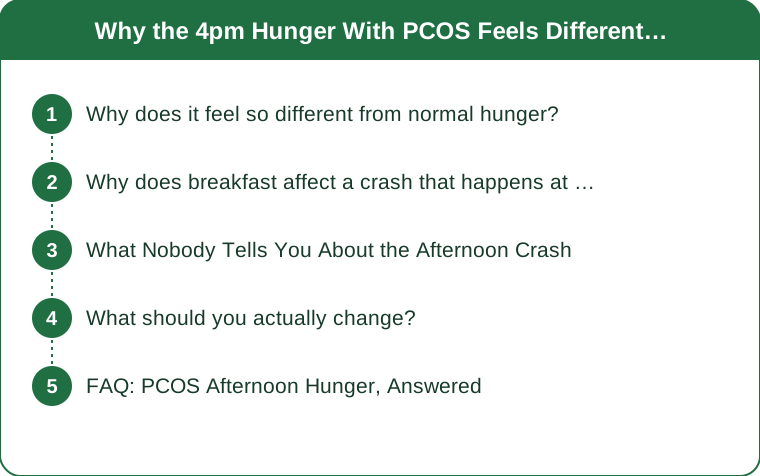
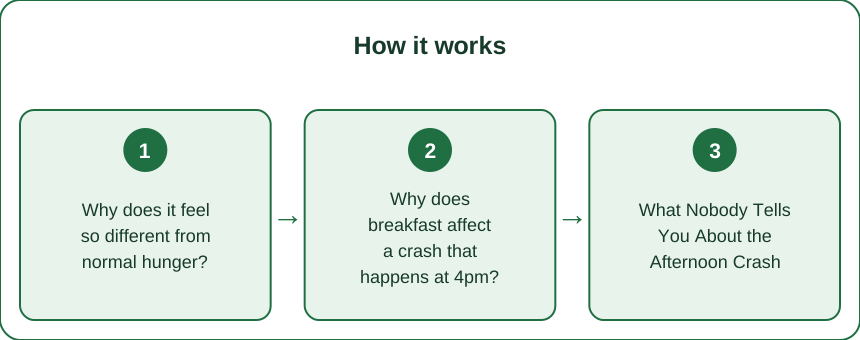
Why does it feel so different from normal hunger?
Because it is a different signal, coming from a different place.
Ordinary hunger builds gradually. It is driven by hormonal signals that rise slowly over hours and can be postponed. You can notice it, decide to eat in twenty minutes, and it waits.
A blood sugar dip triggers an urgent response. When glucose falls below your comfortable range, your body treats it as a situation to correct now. The signal is sharper, it is accompanied by shakiness or irritability, and it is genuinely hard to postpone.
The craving is specific for a reason. A dip drives a craving for fast carbohydrate specifically, because that is what resolves it fastest. Wanting bread rather than food in general is a clue about the mechanism, not a character flaw.
Insulin resistance makes the swing larger. With reduced insulin sensitivity, the pancreas produces more insulin to move the same glucose. A larger insulin response can overshoot, producing a lower trough a few hours later.
Timing points at the meal, not the moment. The dip typically arrives three to five hours after a carbohydrate-heavy meal. A 4pm crash usually traces back to what happened around noon — and often to a low-protein breakfast that set the pattern for the whole day.
Why does breakfast affect a crash that happens at 4pm?
Because the first meal sets a pattern the rest of the day tends to follow.
The second meal effect is real. How your body handles glucose at lunch is influenced by what you ate at breakfast. A low-protein, high-carbohydrate breakfast produces a poorer response at lunch, which sets up a larger afternoon dip.
Morning insulin sensitivity is often lower with PCOS. The same carbohydrate at 7am can produce a larger glucose excursion than at 1pm, which means breakfast is the meal with the most leverage and it is usually the one people put the least thought into.
Skipping breakfast entirely is not a reliable fix. Some people do well with a later first meal, but many with PCOS find that a long morning fast followed by a carbohydrate-heavy lunch produces a bigger afternoon crash than eating breakfast would have.
Protein at breakfast is the single highest-leverage change. 25 to 30 grams — eggs, Greek yogurt, a protein-forward smoothie — blunts the morning excursion and measurably reduces afternoon hunger for a lot of people.
It takes a few days to show up. One high-protein breakfast will not eliminate a 4pm crash. Three to five consecutive days usually will, which is why people who try it once conclude it does not work.

What Nobody Tells You About the Afternoon Crash
Sleep the night before affects it more than most single meals do. One short night measurably reduces insulin sensitivity the next day. If your afternoon crashes are erratic rather than daily, look at your sleep log before you look at your food log — the correlation is usually obvious once you put them side by side.
Coffee instead of lunch reliably produces a worse crash. Caffeine suppresses appetite temporarily and does nothing for glucose, so the underlying dip arrives on schedule with no fuel to meet it. The 4pm crash after a coffee-only lunch is consistently the worst version.
Walking after lunch does more than most people expect. Ten minutes of easy walking after a meal meaningfully lowers the glucose peak, and a lower peak means a smaller subsequent trough. It is the cheapest intervention in the whole list and it works on the same day.
The crash gets blamed on the afternoon snack that follows it. People notice they eat badly at 4pm and conclude they have an afternoon willpower problem. The eating is the correction, not the cause, and treating it as a discipline issue misses the intervention point entirely by several hours.
Stress hormones amplify it. A stressful afternoon raises cortisol, which raises glucose, which prompts more insulin, which deepens the eventual dip. This is why the crash is worse on hard workdays than on quiet ones even with identical meals.
What should you actually change?
Work backwards from the crash, and change the meals rather than the moment.
Put 25 to 30 grams of protein in breakfast. This is the highest-leverage single change and it is usually the easiest to implement. Eggs, Greek yogurt, cottage cheese, or a protein shake all work.
Build lunch around protein and fat with carbohydrate alongside, not as the base. A sandwich alone produces a very different curve than the same sandwich with a side of protein and some fat. You are not removing carbohydrate — you are changing what it arrives with.
Walk for ten minutes after lunch. It lowers the peak, which lowers the trough. If you can only do one thing on a busy day, do this one.
Eat a planned 3pm snack for two weeks. Protein-forward, not fruit alone — a handful of nuts with cheese, or yogurt. Eating before the crash prevents it far more effectively than responding to it, and after two weeks you will know whether you still need it.
Track for a week before drawing conclusions. Note breakfast protein, lunch composition, sleep hours, and afternoon hunger on a one-to-five scale. The pattern usually appears within five days. If afternoon symptoms include dizziness, sweating, or confusion, that is worth a professional evaluation rather than a dietary experiment — this is general information, not medical advice.
FAQ: PCOS Afternoon Hunger, Answered
Is this the same as reactive hypoglycemia?
It shares the mechanism, though most people experiencing it never reach a clinically low glucose reading. The symptoms track the size and speed of the drop rather than the absolute number, which is why you can feel genuinely awful at a value that looks normal on paper.
Should I cut carbohydrates entirely?
Usually not, and it often backfires. Very low carbohydrate approaches work well for some people with PCOS and produce worse cravings and poorer adherence for others. Changing what carbohydrate arrives with — protein, fat, fiber — solves the crash for most people without eliminating anything.
Why is it worse in the fall and winter?
Shorter days affect sleep timing and quality, and reduced light exposure influences appetite regulation. Many people notice afternoon hunger intensifies as daylight shortens through October, which is a real seasonal pattern rather than an imagined one.
TL;DR:
- Urgent, specific 4pm hunger is usually a blood sugar dip, not ordinary appetite
- Insulin resistance produces a bigger insulin response, which can overshoot into a lower trough
- The intervention point is breakfast and lunch, three to five hours earlier — not the 4pm moment
- 25 to 30g of protein at breakfast plus a ten-minute walk after lunch fixes it for many people
- Give any change five days; one high-protein breakfast will not change the pattern
The most useful shift here is to stop treating 4pm as a willpower checkpoint. By the time the craving arrives, the decision that caused it was made at breakfast — and that is genuinely good news, because breakfast is a much easier decision to change.
Keep Reading
This article is for general informational purposes only and is not medical advice. Always consult a qualified health professional for guidance specific to you.