Why Strength Training Affects PCOS Symptoms Differently Than Cardio Does
Quick Answer: Strength training appears to improve insulin sensitivity and body composition in PCOS through building metabolically active muscle mass, a mechanism distinct from cardio’s calorie-burn-focused benefit — research increasingly suggests the type of exercise, not just total activity volume, matters for managing PCOS’s underlying insulin resistance.
More cardio was the standard PCOS advice for years. The newer research suggests what kind of exercise may matter as much as how much.

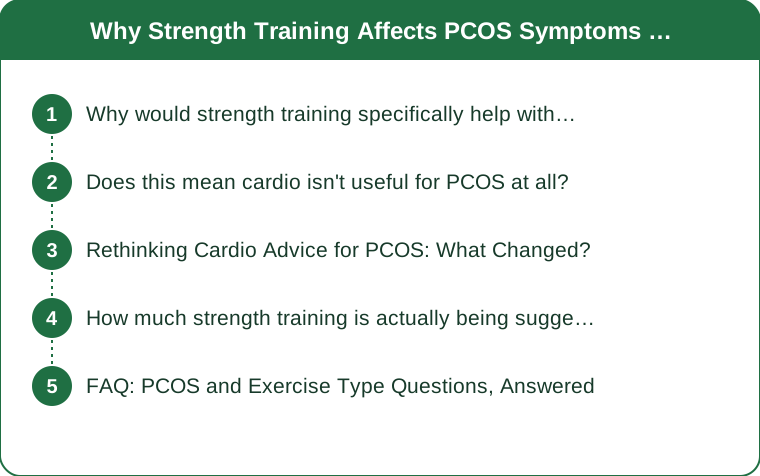
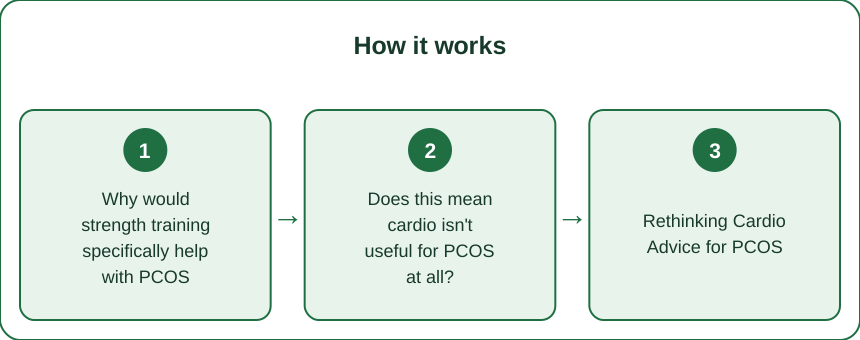
Why would strength training specifically help with PCOS symptoms?
PCOS is closely linked to insulin resistance for many who have it, and building muscle mass through strength training increases the body’s total capacity for glucose uptake and storage, directly addressing that underlying insulin sensitivity issue.
This mechanism is somewhat distinct from cardio’s primary benefit, which centers more on calorie expenditure and cardiovascular health rather than directly building this additional glucose-processing muscle tissue.
Does this mean cardio isn’t useful for PCOS at all?
No — cardio still provides real cardiovascular and calorie-balance benefits relevant to PCOS management, particularly given elevated cardiovascular risk factors sometimes associated with PCOS.
The research suggests combining both, rather than relying on cardio exclusively, may be the most effective approach for addressing PCOS’s multiple underlying factors.

Rethinking Cardio Advice for PCOS: What Changed?
Older PCOS exercise guidance leaned heavily on cardio for weight management, based on a general calorie-burn framework common in exercise advice at the time.
Newer research specifically examining insulin sensitivity and muscle mass has shifted some emphasis toward including structured strength training as a distinct, complementary tool rather than treating cardio as the sole exercise recommendation.
How much strength training is actually being suggested here?
Research in this area generally examines two to three strength sessions per week, covering major muscle groups, rather than extreme or highly specialized training volumes.
This is a moderate, sustainable addition alongside existing cardio habits, not a full replacement recommendation for people already engaged in regular cardio.
FAQ: PCOS and Exercise Type Questions, Answered
Should someone with PCOS stop doing cardio and switch entirely to strength training?
No — the research supports combining both rather than exclusively choosing one, since they appear to address somewhat different aspects of PCOS management.
Does the type of strength training (weights versus bodyweight) matter for this effect?
Both appear to contribute to building muscle mass and improving insulin sensitivity, though progressive overload over time matters more than the specific equipment used.
Should exercise changes for PCOS be discussed with a healthcare provider?
Yes — PCOS varies significantly between individuals, and a provider familiar with your specific case can help tailor an approach. This is general information, not medical advice.
TL;DR:
- Strength training builds metabolically active muscle that directly supports insulin sensitivity
- This mechanism differs from cardio’s primarily calorie-burn-focused benefit
- Combining both, rather than relying on cardio alone, aligns with the newer research direction
- Two to three moderate strength sessions per week is the general range being studied
The update to PCOS exercise advice isn’t that cardio was wrong — it’s that strength training appears to be doing something distinct and worth adding, not skipping. This is general information, not medical advice.
Keep Reading
This article is for general informational purposes only and is not medical advice. Always consult a qualified health professional for guidance specific to you.