Why Walking Might Do More for PCOS Than High-Intensity Cardio
Quick Answer: High-intensity training raises cortisol, and PCOS is already linked to elevated stress-hormone sensitivity in many women — for some, that combination can worsen symptoms rather than help, while walking supports insulin sensitivity with far less added cortisol load.
More intensity should mean more results — that’s the assumption behind pushing hard cardio for PCOS. For a meaningful number of women with PCOS, the opposite plays out: the harder workouts leave them more symptomatic, not less, while a daily walk quietly does more.

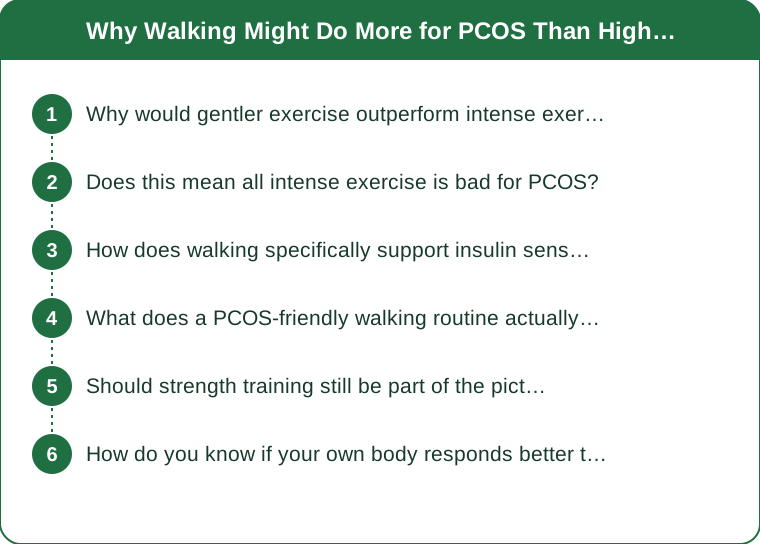
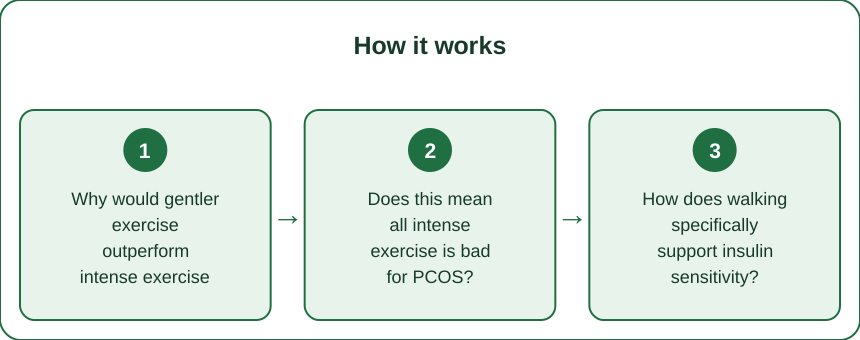
Why would gentler exercise outperform intense exercise for PCOS specifically?
PCOS is associated with altered cortisol and insulin dynamics in many women, and high-intensity exercise is a genuine physiological stressor that raises cortisol as part of a normal training response. In someone whose hormonal system is already sensitized, that added cortisol spike can work against the insulin-sensitivity benefits exercise is otherwise supposed to provide.
Does this mean all intense exercise is bad for PCOS?
No — this varies significantly by individual, and many women with PCOS do well with structured high-intensity training. The point is that if intense workouts consistently leave you feeling worse (more fatigue, disrupted cycles, increased symptoms) rather than better, that’s worth taking seriously as a signal rather than pushing through it as “just needing to get fitter.”
How does walking specifically support insulin sensitivity?
Sustained, moderate movement like walking improves how effectively muscles take up glucose from the bloodstream, supporting insulin sensitivity — a core issue in PCOS — without the same magnitude of cortisol spike that comes with high-intensity intervals or heavy, fast-paced training.

What does a PCOS-friendly walking routine actually look like?
Consistency matters more than intensity here — a daily 30-45 minute walk, ideally including some after meals specifically (which has a documented effect on post-meal blood sugar response), tends to be more sustainably beneficial than sporadic intense sessions.
Should strength training still be part of the picture?
Yes — strength training builds muscle mass, which improves overall insulin sensitivity independent of the cortisol concern tied to high-intensity cardio specifically. It’s a different category of intensity and generally well-tolerated alongside a walking-based cardio approach.
How do you know if your own body responds better to walking than intense cardio?
Track how you feel in the 24-48 hours after each type of session — persistent fatigue, worsened sleep, or symptom flare-ups after intense sessions (versus feeling steady after walks) is a meaningful individual signal, even without lab work to confirm the cortisol mechanism directly.
TL;DR:
- High-intensity exercise raises cortisol, which can work against PCOS in cortisol-sensitive individuals
- Walking supports insulin sensitivity with a much smaller added stress-hormone load
- This varies by person — some do well with intensity, others clearly don’t
- Strength training remains valuable alongside a walking-based cardio approach
This is general information, not medical advice — if intense workouts consistently leave you feeling worse, that pattern is worth discussing with a doctor familiar with PCOS rather than pushing through it.
Keep Reading
This article is for general informational purposes only and is not medical advice. Always consult a qualified health professional for guidance specific to you.